Special Issue - Science communication: Making research accessible - The role of science communication in policymaking: Why it matters for the MCAA Policy Working Group
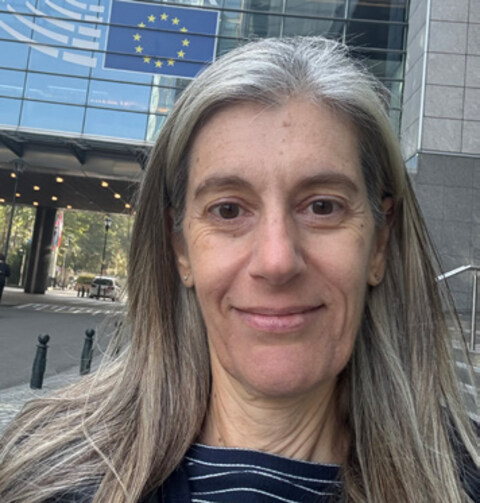
Good science relies on effective communication. Without clear messages, research stays within academia instead of shaping real decisions. This article explores how the MCAA Policy Working Group supports researchers in building the communication skills and networks to connect science with policy and diplomacy, turning evidence into impact for more inclusive and forward-looking policymaking.
Science communication is no longer a nice- to-have skill. It has become a cornerstone of evidence-informed policymaking. In a world facing climate change, health crises, and digital transformation, policymakers rely on clear, reliable, and prompt scientific insights.
For researchers, this means going beyond publications to translate complex findings into concise, actionable messages that inform decisions. The MCAA Policy Working Group (WG) embraces this mission by helping researchers, especially early-career scientists, develop the confidence and communication skills to engage effectively at the science-policy-diplomacy interface.
Why science communication matters in policymaking
Evidence alone does not shape policy. Policymakers work within environments influenced by priorities, public expectations, and time constraints. For science to inform policy, communication must be both accessible and actionable:
• Accessible communication translates research into clear, jargon-free language without sacrificing accuracy.
• Actionable communication connects findings to policy needs, offering evidence-based options.
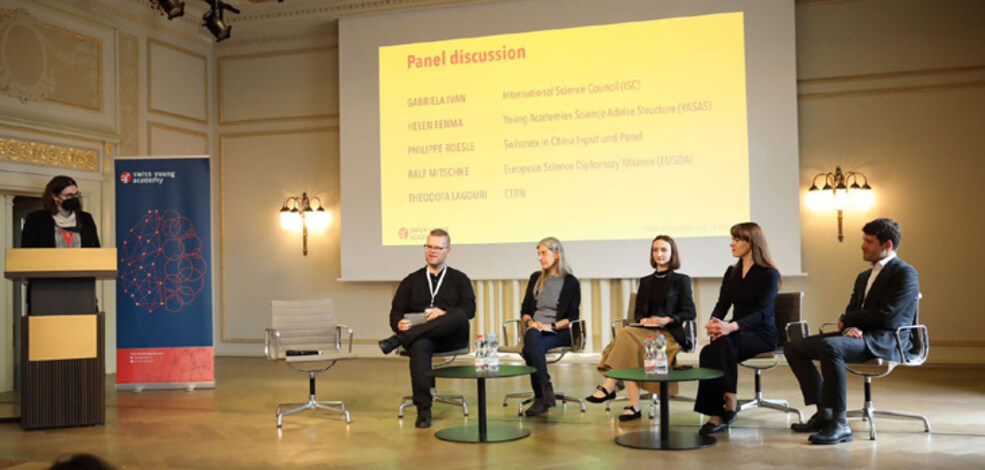
As the European Commission (EC) Guide on Writing Impactful Policy Briefs emphasises, effective communication answers three questions: What is the issue? Why does it matter now? What should be done? Without this framing, even robust evidence risks being overlooked.
Linking science communication, policy, and diplomacy
Science communication, policy, and diplomacy are mutually reinforcing. Science policy shapes how research is funded and governed; communication ensures that these frameworks stay transparent, inclusive, and responsive to society. This approach aligns with the Joint Research Centre’s Science for Policy Competence Framework, which defines communication as a core skill for evidence- informed policymaking.
Communication is also at the heart of science diplomacy, turning complex data into dialogue that crosses borders. Institutions and global frameworks such as the European Commission, UNESCO, CERN and the EU Science Diplomacy Alliance recognise communication as a strategic instrument for diplomacy, building visibility, trust, and shared understanding.
The European Framework for Science Diplomacy (2025) calls for embedding science within diplomatic services and strengthening training for scientists and policymakers. Likewise, CERN, founded under UNESCO in 1954, embodies science diplomacy in practice. CERN’s Science Gateway, inaugurated in 2023, serves as a global hub for education and dialogue, illustrating how open communication can advance knowledge and peace.
For the MCAA Policy WG, these frameworks inspire practical action, empowering researchers to act as trusted intermediaries who connect evidence with policy-diplomacy and societal progress.
The role of the MCAA Policy WG
The Policy WG places science communication at the centre of its mission. Through webinars, workshops, and mentoring, it builds bridges between researchers and policymakers on topics such as sustainable research careers, open science, and science diplomacy.
Its two new Task Forces advance this vision:
• Science Policy Task Force on Research Careers focuses on improving research-career frameworks and strengthening advocacy and communication skills.
• Science Diplomacy Task Force on Capacity Building offers training and mentoring for researchers to operate confidently at the science–policy–diplomacy interface.
Together, these initiatives promote communication as both a skill and a shared responsibility, enabling researchers to transform scientific insight into policy impact.
Digital communication: opportunities and ethics
The digital era has transformed how science reaches society and policymakers. Social media and online platforms create new spaces for visibility and engagement, but also risks, misinformation, oversimplification, and unequal access. The Policy WG advocates for the responsible and ethical use of digital communication tools, empowering researchers to engage strategically, preserve accuracy, and maintain public trust in science.
Looking ahead
Science communication is not an add-on. It is the bridge between research and impact. For the MCAA community, this means preparing researchers to engage confidently with policymakers, journalists, and the public.
Through its events, collaborations, and task forces, the Policy WG is encouraging the new generation of scientists to see communication not only as outreach but as participation, working together to ensure that scientific evidence and researcher voices go hand in hand in shaping the policies that define our collective future.
Theodota Lagouri
MCAA Policy Working Group, Chair
References
CERN (2023). CERN inaugurates Science Gateway, its new outreach centre for science education. https://home.cern/news/press-release/cern/cern-inaugurates-science-gateway-its-new-outreach-centre-science-education
EU Science Diplomacy Alliance (2024). About the Alliance. https://www.science-diplomacy.eu
European Commission (2024). Sharing Scientific Evidence with Policymakers: Guide on Writing Policy Briefs for Impact. Research Executive Agency (REA), Brussels. https://op.europa.eu/en/publication-detail/-/publication/05d26b80-8f7f-11f0-bfe2-01aa75ed71a1/language-en
European Commission / EU Science Diplomacy Working Groups (2025). A European Framework for Science Diplomacy (Summary). Brussels: Directorate-General for Research and Innovation. https://research-and-innovation.ec.europa.eu/document/download/6d91a26e-a0c5-4a22-b77b- 4a0c18ac5f2c_en?filename=ec_rtd_european-framework-science-diplomacy-summary.pdf
Joint Research Centre (2023). Science for Policy Competence Framework. European Commission, Brussels. https://publications.jrc.ec.europa.eu/repository/bitstream/JRC129623/JRC129623_01.pdf
UNESCO (2021). Recommendation on Open Science. Paris: United Nations Educational, Scientific and Cultural Organization. https://unesdoc.unesco.org/ark:/48223/pf0000379949